Watershed Restoration, Planning/Implementation
Watershed Restoration Implementation and Planning
Fish Passage, Salmonid & Native Species Restoration Projects
Project: Feather River Side Channels (2024-ongoing)
Flowing from the Sierra Nevada to the Sacramento Valley, the Feather River is a vital tributary of the Sacramento River system, supporting diverse aquatic and terrestrial habitats while providing critical water resources for California’s communities and agriculture. Along this dynamic waterway, restoration partners and resource agencies initiated a series of habitat improvement projects designed to enhance ecological function, restore connectivity, and support resilient fish and wildlife populations. This project aims to add side channels to increase connectivity between the mainstem Feather River and adjacent habitats, reducing salmonid stranding while also protecting and enhancing nesting habitat for the State-threatened Bank Swallow. Together, these actions support the long-term recovery of sensitive species and the resilience of riparian and floodplain ecosystems.
As part of this collaborative effort, the Thomas Gast & Associates Environmental Consultants (TGAEC) team held a leading role across multiple phases of project development and implementation. TGAEC led grant writing efforts, securing key funding to advance restoration design and monitoring goals. During project planning, we coordinated technical input among engineers, agencies, and stakeholders, ensuring that design elements supported both habitat restoration and long-term site sustainability.
TGAEC fieldwork efforts focused on spatial data acquisition, including detailed bathymetric surveys of the river channel, used to assess geomorphic conditions and inform restoration layouts. Our biologists and scientists led ongoing monitoring, encompassing water quality, fisheries sampling, and avian surveys documenting seasonal bird presence and nesting activity. We also participated in wetland delineations and the preparation of accompanying technical reports. TGAEC biologists led the development of the terrestrial habitat report, which included detailed habitat mapping and classification throughout the site.
To evaluate the ecological outcomes of restoration actions, our team conducted performance monitoring comparing pre- and post-construction conditions, tracking trends in habitat quality, species use, and population responses across the project area.
The Feather River restoration work highlights TGAEC’s multidisciplinary expertise, spanning hydrology, fisheries, wildlife biology, and GIS analysis, which can integrate science, design, and field implementation to advance ecosystem recovery while meeting project performance goals.
Project: Felt Ranch Off-Channel Rearing Habitat Enhancement Planning and Implementation Project (Wood Creek Phase 3) (2023-ongoing)
Located within the Freshwater Creek basin in Humboldt County, California, Wood Creek flows through a landscape historically shaped by tidal influence and rich wetland habitats. Over time, agricultural conversion and land drainage altered its natural hydrology, reducing connectivity between the freshwater and estuarine environments essential to anadromous fish and other native wildlife. Recognizing the ecological significance of this area, the Wood Creek Habitat Restoration Project aims to restore the upper stream-estuary ecotone and reestablish habitat processes that support the long-term recovery of Coho salmon and associated species.
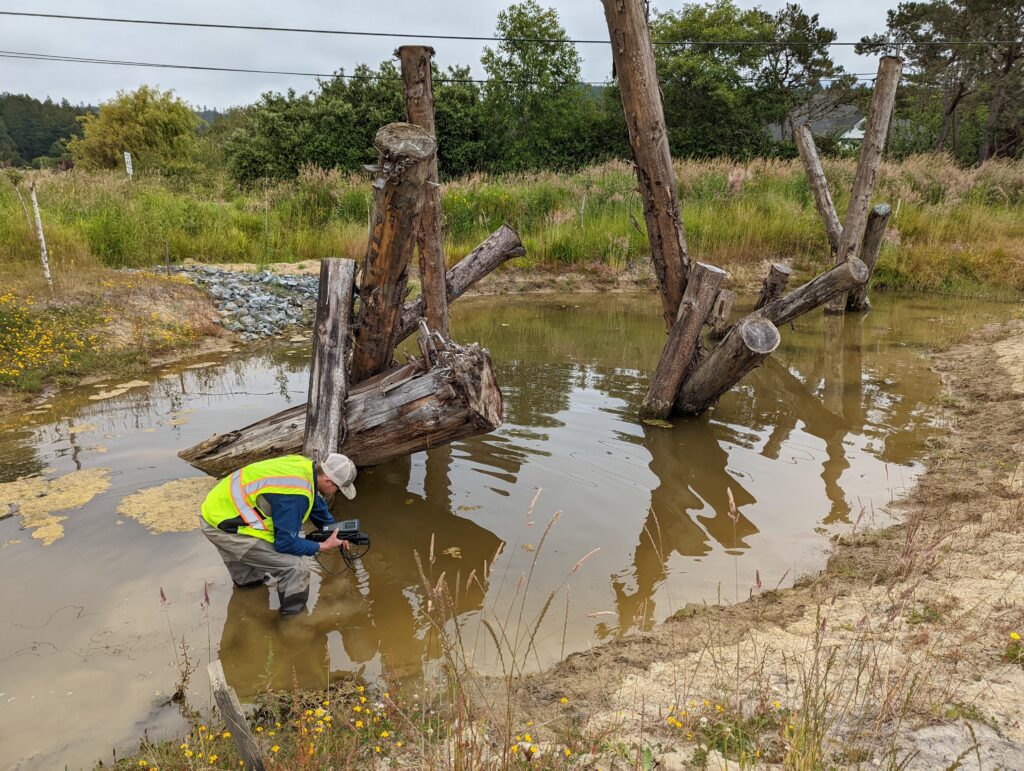
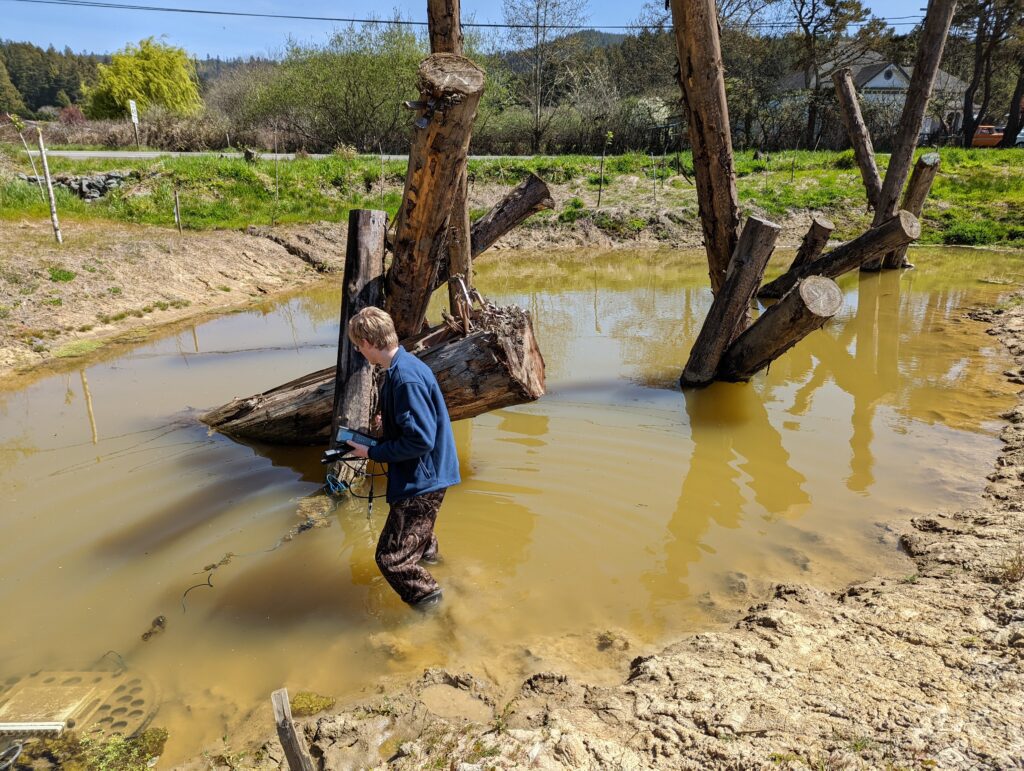
The Thomas Gast and Associates Environmental Consultant (TGAEC) team played a key leadership role across both the planning and implementation phases of the project. We led grant writing teams, securing critical funding to advance design, construction, and long-term monitoring efforts. Long-term fisheries monitoring included monthly eDNA and physical fish surveys employing seining methods. TGAEC installed a PIT tag array to track salmonid movement and habitat use, completing daily analysis on tagged salmonids entering and leaving the site. In tandem, we led water quality monitoring (water temperature, dissolved oxygen, and conductivity) through water level and barometric logger deployment to assess conditions throughout the site.
At the initiation of construction, our biologists coordinated and participated in aquatic species relocation, ensuring the safe capture and movement of fish and amphibians from active work areas.
Following project implementation, the TGAEC team will conduct performance monitoring, comparing pre- and post-construction habitat conditions and population responses to evaluate restoration effectiveness.
The Wood Creek Restoration Project represents a model of collaborative, science-driven restoration, integrating fisheries biology, ecological monitoring, and stream geomorphology to rebuild the natural processes that sustain Humboldt County’s stream-estuary ecosystems and the species that depend on them.
Project: Lower Ryan Creek Off-Channel Habitat and Floodplain Enhancement
Thomas Gast & Associates Environmental Consultants (TGAEC) worked with RCAA to attain funding and to provide services for the Lower Ryan Creek Off-Channel Habitat and Floodplain Enhancement project located in Eureka, California. This project's main objectives included: restoring hydrologic connectivity between the floodplain wetland habitats and Ryan Creek; establishing juvenile salmonid migration access between Ryan Creek and the floodplain wetlands; enhancing the existing freshwater wetlands on the floodplain to create a diversity of slow-water productive rearing habitats for juvenile Coho Salmon while benefiting other native wetland dependent species; and enhancing the riparian forest between Ryan Creek and the floodplain wetland habitats to establish a diversity of native plant species with a multi-layered canopy and understory.
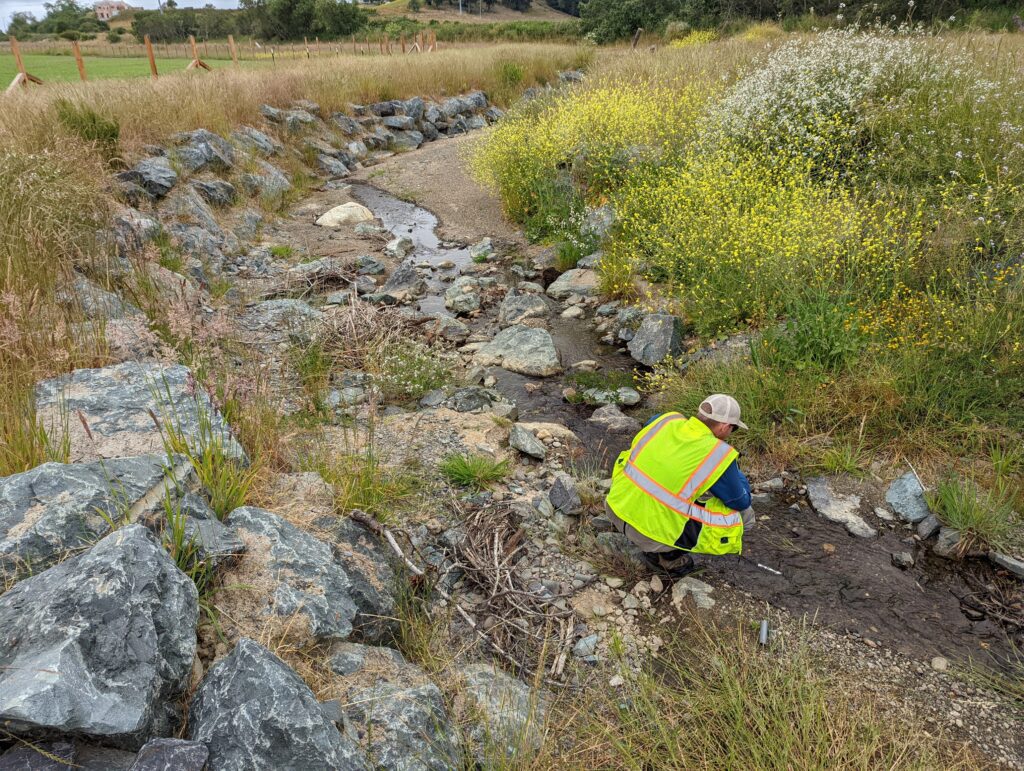
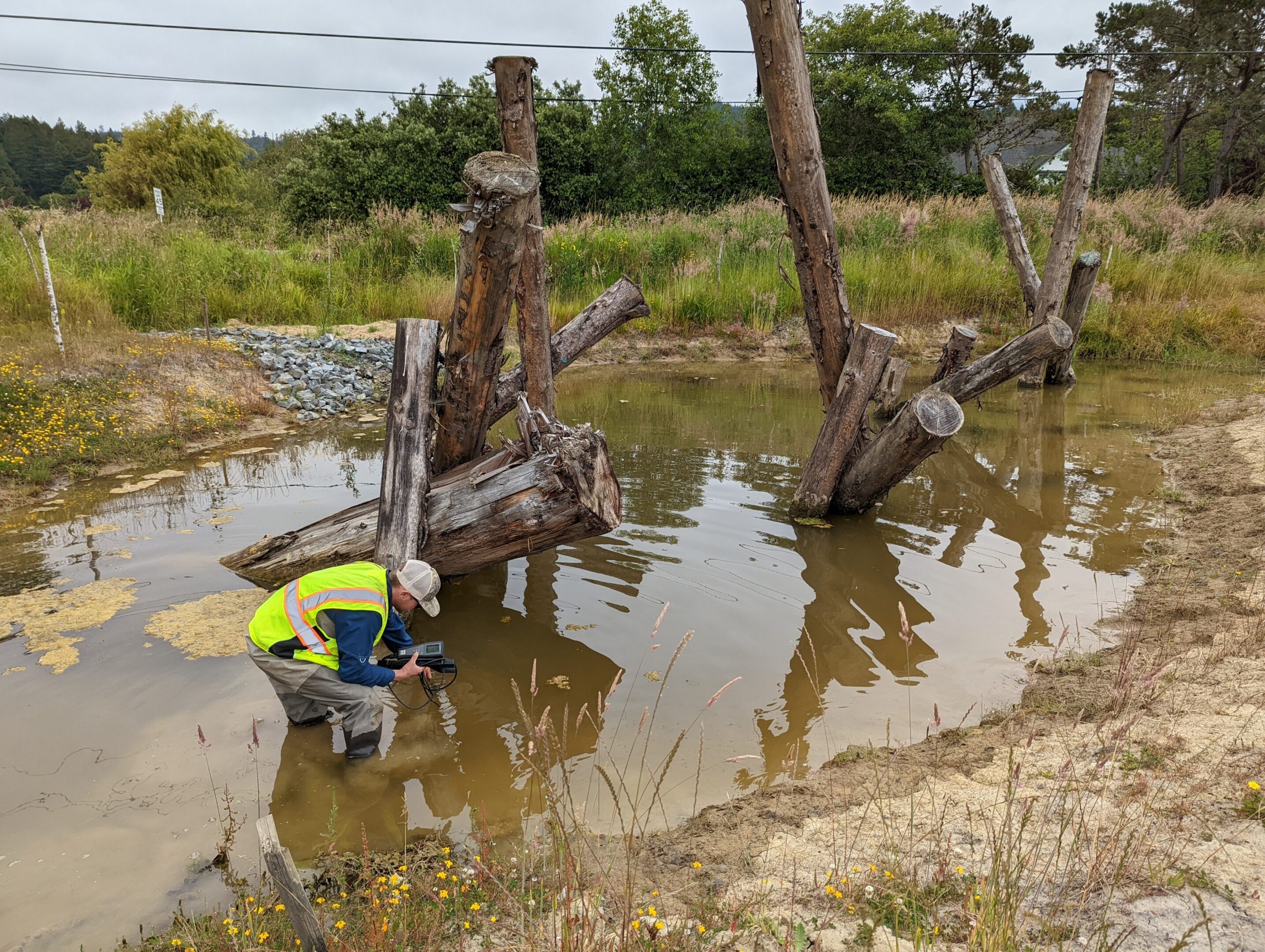
TGAEC deployed data loggers throughout the project site to collect information on water level, water temperature, dissolved oxygen, and conductivity. Water level data were used to plan and design ponds, connecting channels, and planting zones. TGAEC personnel conducted water quality measurements and fisheries monitoring.
Project: Jacoby Creek Water Sustainability and Anadromous Fish Habitat Enhancement Feasibility Study
Thomas Gast & Associates Environmental Consultants (TGAEC) collaborated with Michael Love & Associates Hydrological Solutions, GHD, and BBW & Associates Forestry Consultants to create an overarching plan to improve aquatic habitat quality and reduce flooding impacts in the lower Jacoby Creek valley adjacent to Humboldt Bay. TGAEC staff completed an aquatic habitat assessment of Jacoby Creek following specific Habitat Inventory protocols. In addition to characterizing aquatic habitat, TGAEC staff also collected general information on large woody debris, small woody debris jams, salmonid redds, carcasses, and freshwater mussel presence. TGAEC was responsible for installing, maintaining, and downloading data from water level and salinity loggers in Jacoby Creek. TGAEC was also responsible for four high-flow discharge measurements throughout the site.
Project: Battle Creek Confluence (side channel)
Located near the confluence of Battle Creek and the Sacramento River in Northern California, the Battle Creek Confluence Project seeks to improve habitat conditions for threatened and endangered salmonid populations. This region, historically known for its productive cold-water fisheries and complex riparian corridors, has faced decades of hydrologic alteration and habitat fragmentation. The project focuses on adding a major side channel that would provide vital habitat for Chinook salmon, steelhead, and other native aquatic species.
To advance this vision, the Thomas Gast & Associates Environmental Consultants (TGAEC) team played an integral role from planning through implementation. Staff led the grant writing effort, securing funding that enabled the project to progress from concept to reality. TGAEC also provided technical coordination, aligning the work of engineers, biologists, and agency partners to ensure that restoration design elements effectively addressed fish passage, habitat function, and channel connectivity.
Spatial analysis formed a key component of the technical approach. TGAEC scientists collected and analyzed high-resolution bathymetric data to map channel morphology and assess flow dynamics at and surrounding the confluence. These data helped inform restoration design and provided baselines for evaluating hydrologic and biological effectiveness over time.
As part of biological monitoring, fisheries biologists conducted snorkel surveys and beach seining to assess species presence, abundance, and seasonal habitat use throughout the project area. In addition to fieldwork, TGAEC actively participated in environmental compliance processes, including the National Historic Preservation Act (NHPA) Section 106 consultation, ensuring that cultural and environmental resources were responsibly managed and protected.
Project: Cochran Creek and Quail Slough Fish Passage and Habitat Enhancement (2021)
The primary goals of the Cochran Creek and Quail Slough Fish Passage and Habitat Enhancement Project were to improve fish passage as well as enhance and expand tidal, brackish, freshwater, and riparian habitat conditions on Cochran Creek and Quail Slough on the Organic Matters Ranch in Eureka, CA.
Thomas Gast & Associates Environmental Consultants (TGAEC) biologists completed pre-construction biological surveys. The surveys encompassed the entire area, observing for nesting birds, birds present at the site, special status amphibians, and habitat suitability for listed amphibians.
TGAEC was responsible for fisheries sampling at the project site and spawner surveys that occurred upstream of the project site. Water quality and water levels were also monitored by TGAEC staff. For in-water construction, TGAEC took conducted the aquatic species relocation. TGAEC staff installed an aquatic species exclusion fence on the upstream and downstream extent of construction activities. Minnow traps were utilized during the first phase of the project, where dip netting occurred after the minnow traps were installed. Ambient water quality parameters (dissolved oxygen, water temperature, conductivity, and salinity) were documented before electrofishing took place. Multi-pass electrofishing methods were used to remove fish from the construction site; dip netting also occurred during the electrofishing efforts. Aquatic species that were caught were temporarily held in buckets of aerated water and were transported out of the construction site to a pre-determined relocation/release location that possessed good instream habitat complexity and water quality with cold water and high oxygen content. A comprehensive report of findings from the biological surveys, fish sampling, and aquatic species relocation was created and made available.
Project: Non-Natal Habitat Enhancement for ESA-Listed Salmonids in the Humboldt Bay Watershed (2015- 2016)
In fall 2015, following collaborative discussions with local California Department of Fish and Wildlife (CDFW) scientists, Thomas Gast & Associates Environmental Consultants (TGAEC) identified a need for a prioritized restoration strategy for anadromous accessible habitats in Humboldt Bay. Over 90% of historical tidally-influenced tributary habitat has been lost since the late 19th century, primarily due to levee construction and agricultural development in the area. CDFW investigations over the past 12-15 years have documented that non-natal rearing of salmonids and other fish species is widespread in Humboldt Bay tributaries, where there is a source population that can gain access. Availability (or lack thereof) of suitable rearing habitats can affect fish year-round and was assessed with this project.
TGAEC joined forces with local non-profit restoration specialists Pacific Coast Fish, Wildlife, and Wetlands Restoration Association (PCFWWRA), and met with other fisheries professionals to develop project objectives and submit a proposal to CDFW’s 2016-2017 “Watershed Restoration and Ecosystem Restoration Grant Program”, funded by Proposition 1. In December 2016, our CDFW grant proposal resulted in a funding award for PCFWWRA to implement this project in early summer 2017.
Our project will address the relative lack of non-natal rearing habitats in the lower reaches of anadromous tributaries to Humboldt Bay. TGAEC identified, assessed, and prioritized specific sites in Humboldt Bay tributaries, with a focus on the stream-estuary ecotones for restoration projects that will not only benefit ESA-listed rearing juvenile salmonids, but also other ESA-listed fish species such as tidewater goby and longfin smelt. Project deliverables included conceptual design plans for the five highest priority restoration opportunities, as well as an overall list of identified sites that would benefit from restoration activities.
Project: Project No. 24186.00 CDFW California Anadromous Fish Passage Assessment (2019)
Thomas Gast & Associates Environmental Consultants (TGAEC) completed surveys on the Mad River to observe fish passage and record the path that fish chose to migrate through riffles in order to determine the depth of the track selected by the fish. Stakes were installed with different coloring in both riffles to determine the path fish were taking to migrate. TGAEC staff observed and accurately mapped the paths chosen by fish. A final report explained the determinations on fish passage through the Mad River riffles.
Project: Cochran Creek Fish Passage and Channel Restoration- Planning and Design (August 2015- 2016))
Cochran Creek, a tributary to Humboldt Bay, CA, once supported spawning populations of ESA-listed steelhead and coho salmon before access to the upper watershed was constrained by landscape-scale land conversions and the installation of tide gates. Despite the current tide gate migration hindrance, sporadic observations of anadromous salmonids upstream of the project site indicate that ESA-listed fish species will utilize 1.93 miles of spawning and rearing habitats in Cochran Creek if such access is provided regularly. A comprehensive restoration plan for Cochran Creek was completed during 2006-2011, but was not implemented due to multiple factors, including a change in land ownership.
In 2015, Thomas Gast & Associates Environmental Consultants (TGAEC) staff met with stakeholders from the previous planning efforts and the current landowners to refine options for re-initiating this restoration project. Following these discussions, TGAEC staff developed a work plan to address key limiting factors in the Cochran Creek watershed, including anadromous fish passage, lack of floodplain and channel structure, rearing habitat quality/availability, and riparian habitat quality. The project’s final deliverables included implementation-ready restoration designs with completed permitting. In December 2015, TGAEC developed a proposal on behalf of our non-profit applicant (Coastal Ecosystems Institute of Northern California) that resulted in a funding award from the State Coastal Conservancy’s (SCC) Prop 1 watershed grants program for a multi-year planning and design project.
As the prime contractor, TGAEC provided project management and coordination of four other subcontractors (project team) with CEINC and the SCC. TGAEC staff also conducted pre-project baseline studies of water quality parameters and fish species presence/distribution in the watershed, and the development of a riparian restoration management plan.
Gallery